Shingles lifted across a slope
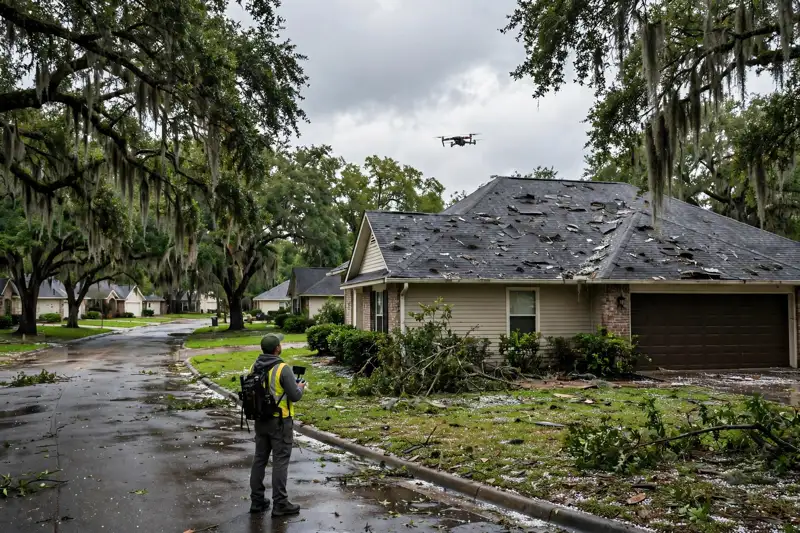
Wind creases shingles long before it tears them off. We check the whole slope, not just the missing pieces.
Houston roofs take Gulf tropical systems, severe thunderstorms and straight-line wind. After a storm, the job is triage first: dry in what is open, document the damage, then scope the repair. If the roof is open now, see emergency roof repair. Then book a roof inspection — every storm page on this site starts there.
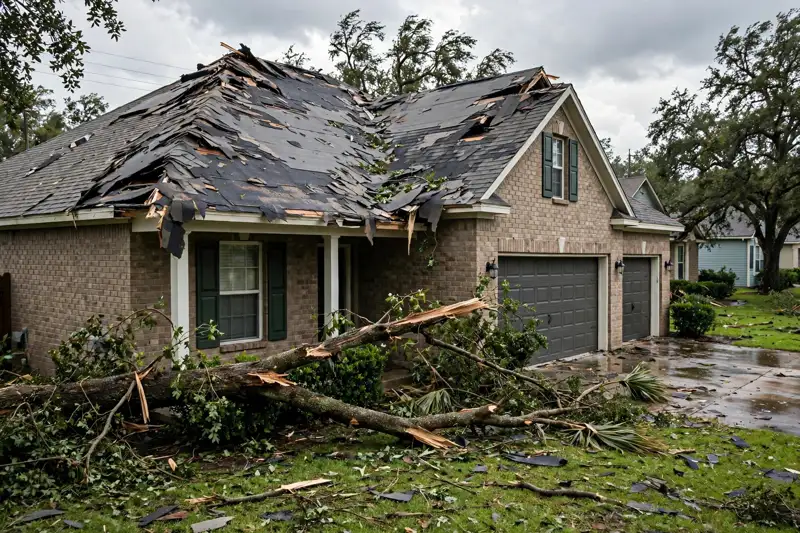
Storm damage comes in three distinct forms, and each is repaired differently: wind uplift that lifts shingles and ridge caps, tree fall and debris that punctures the deck, and water intrusion through a wind-damaged roof that soaks decking and insulation long after the rain stops. A storm repair starts with the roof made weathertight, then a full inspection of every slope — damage that looks minor from the ground is often worse on the roof — and a written scope that separates storm damage from pre-existing wear.
Houston’s recent storm history is the reference point: Hurricane Harvey in August 2017, the May 2024 derecho with straight-line winds near 100 mph downtown, and Hurricane Beryl in July 2024 — a Category 1 that still stripped roofs, including panels from NRG Stadium. A Category 1 is not a minor storm. Wind damage is covered in its own section below, and so is hurricane damage. Hail is covered on our hail damage page.
Wind, hurricane, tree and water damage are different repairs. Here is how each one is handled.
Lifted and missing shingles, torn ridge caps and creased courses — the most common Houston storm damage — repaired to match or replaced where the roof is at end of life. Wind damage is a section, not a separate page, because the repair is the same craft.
Hurricane season runs 1 June–30 November, peaking in the second week of September. After a named storm we check wind uplift, ridge and hip caps, flashing, and water entry at every penetration — a Category 1 can strip a roof, as Beryl proved in July 2024.
Punctured decking, broken rafters and crushed valleys from limbs and debris. The deck is opened, damaged structure replaced, and the roof rebuilt — not patched over a hole.
Water that entered through wind damage soaks decking and insulation. We find how far the wetting spread, replace what is soft, and dry the assembly before re-roofing.
Every slope photographed and measured, with the storm date recorded. The inspection is the basis for the scope — and for your insurance file.
We document the damage, provide a scope, and can be present at the adjuster’s inspection at your request. We are not a public adjuster, we do not negotiate claims, and we cannot guarantee approval. Texas law does not allow a contractor to waive your deductible.
Tell us what the storm did and whether water is coming in. We sort what is urgent from what can wait, and give you a realistic time to reach you during office hours.
Torn sections are tarped and lifted shingles secured, so the next rain stays outside while the permanent repair is planned.
Every slope is walked, photographed and measured, with the storm date recorded. Damage that looks minor from the ground is often worse on the roof.
A scope that separates storm damage from pre-existing wear — what the storm broke, what needs repair, and what needs replacement.
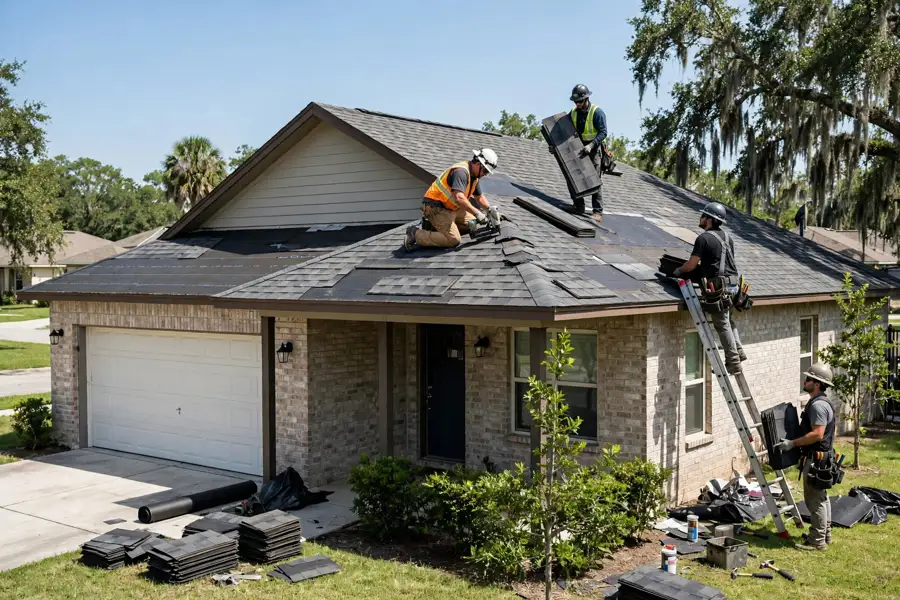
The repair or replacement is completed, the debris is hauled, and we walk the roof with you and show the photos.
Storm work starts with making the roof dry, then measuring the damage properly.
Heavy tarps secured with battens so open sections stay dry through the next rain.
Checks how far water has spread into decking and insulation, so the scope separates storm damage from old wear.
Every damaged slope photographed and measured while the damage is fresh — the record your insurer needs.
Removing torn material and re-setting lifted shingles so the repair sits flat and seals.
Straight course lines and a stable ladder footing on Houston’s varied roof pitches.
Fall protection for every crew member on every roof, tied off to a proper anchor.
Before: straight-line winds near 100 mph lifted shingles and ridge caps across the roof, with the ridge open to rain.
After: the roof dried in, every slope inspected, and the wind damage repaired to match with new ridge ventilation.
Before: a Category 1 storm stripped shingles and ridge caps — proof that a Category 1 is not a minor storm.
After: the open sections tarped, the damage documented for the insurer, and the roof rebuilt with the wind damage repaired.
Before: a limb punctured the deck and crushed a valley, with water reaching the insulation below.
After: the damaged decking replaced, the valley rebuilt, and the roof dried in before the next rain.
Most Houston roof failures start small and hide. After a storm, these are the ones we see most.
Call (346) 654-5170Wind creases shingles long before it tears them off. We check the whole slope, not just the missing pieces.
The hole is the obvious damage; the soaked insulation underneath is the expensive one. We open the deck and check both.
Wind-driven rain can enter through a damaged roof and show up later. We trace it to the entry point and dry the assembly.
Insurers pay for storm damage, not wear. We separate the two in writing, so the scope is honest and the claim is clean.
“Absolutely wonderful service. Had an issue with my roof leaking and they were attentive and listened my concerns. They get on the roof and found and fix the leak then took care of the interior too. They even fixed a poorly done previous repair done by another company. I Would recommend”
Nate DorrGoogle review · 3 months ago
✓ Google reviewEvery quote above is a verbatim Google review of Bridgegate Construction LLC. Our Google profile holds 31 reviews, all 5 stars; the ones we have not read are shown only as a total, never as quotes. Read all 31 reviews on our Google profile.
Stay off the roof. Photograph the damage from the ground, put buckets under active drips, and call us during office hours so we can triage and tarp anything open. Then book a full roof inspection — damage that looks minor from the ground is often worse on the roof — and keep the photos and the storm date for your insurance file.
Yes. Hurricane Beryl in July 2024 was a Category 1 at landfall and still stripped roofs across Houston, including panels from NRG Stadium. Category 1 means sustained winds of 74–95 mph — enough to lift shingles, tear ridge caps and drive rain under flashing. Never treat a Category 1 as a minor storm.
Most Houston homes carry wind and hail cover in their standard homeowners policy — most of Houston is outside the TWIA catastrophe area, which covers only Harris County east of Highway 146. Whether your claim is approved, and how much is paid, is your insurer’s decision. We document the damage and provide a scope; we cannot guarantee approval, and Texas law does not allow a contractor to waive your deductible.
Wind lifts, creases and tears shingles and ridge caps, and drives rain under flashing; hail bruises shingles, strips granules and dents soft metal like gutters and vents. They often arrive in the same storm but are assessed differently. Hail damage is covered on our hail damage roof repair page.
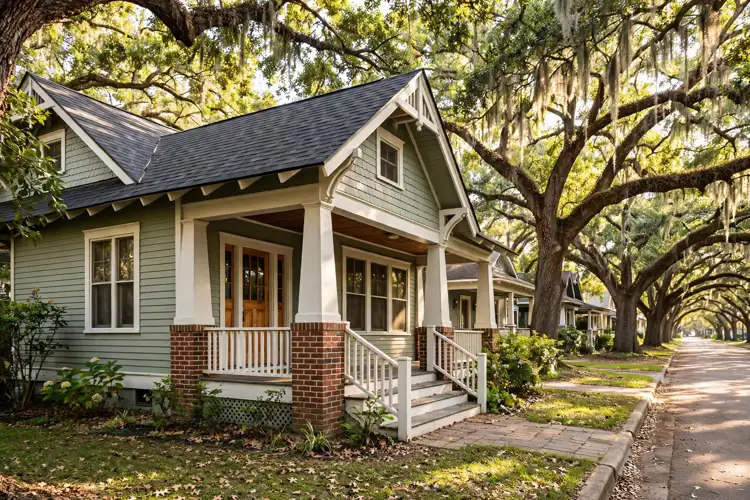 Emergency Roof RepairStorm triage and tarping to dry in an open roof, with a prompt response during office hours.Explore →Hail Damage Roof RepairHail damage assessed from the roof surface — granule loss, bruising and soft-metal damage.Explore →
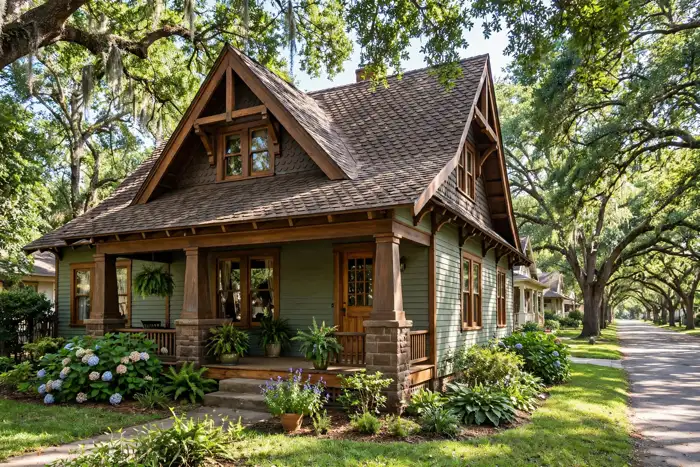 Roof InspectionEvery slope photographed, the attic checked where there is access, and a written assessment with photos and video.Explore →
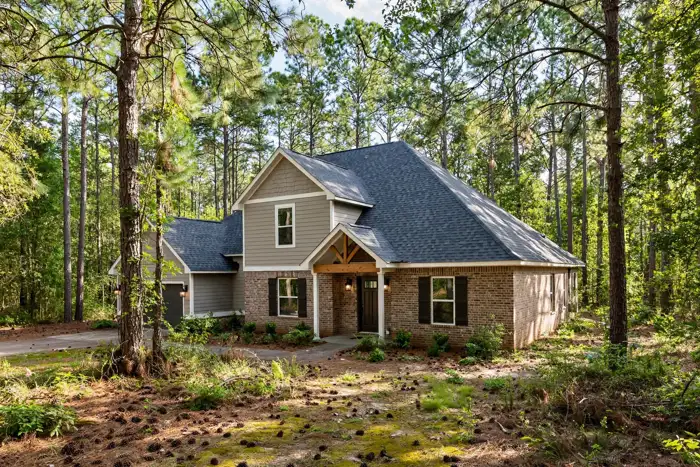 Roof Leak RepairLeaks traced to their source and fixed properly, with the interior damage taken care of too.Explore →
 Roof RepairShingle, flashing, vent-boot, valley and ridge-cap repairs, plus fascia and soffit at the roof edge.Explore →
 Roof ReplacementFull tear-off to the deck and a complete new system — shingle, metal, tile or flat — with the permit handled.Explore →Roof MaintenanceTune-ups, gutter cleaning and soft-wash roof cleaning that catch small problems early.Explore →
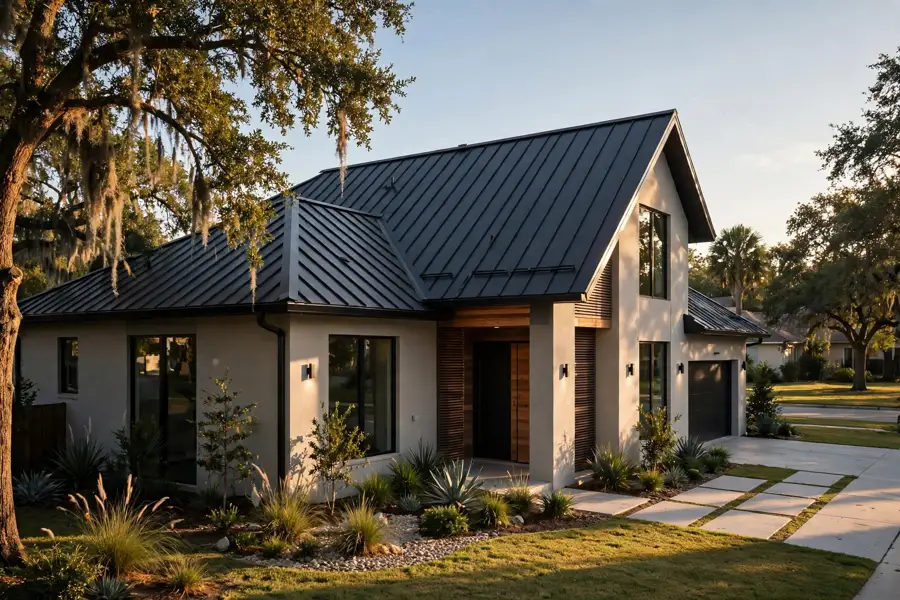 Attic VentilationBalanced ridge and soffit ventilation, vent installation and attic fans for Houston heat and humidity.Explore →
Call (346) 654-5170 during office hours. We will triage the damage, dry in what is open, inspect the full roof, and put the repair in writing.
Call (346) 654-5170Call (346) 654-5170 or send us a message and we will get back to you during office hours. Tell us which storm hit and what the roof looks like now.