Granule loss you cannot see
Granules in the gutter are the first sign. We check the shingle surface, not the driveway.
Hail bruises shingles, strips granules and dents gutters and vents — and most of it is invisible from the driveway. We assess hail damage from the roof surface, photograph it, and help you decide between repair and replacement. If the roof is open, see emergency roof repair first, then book a roof inspection.
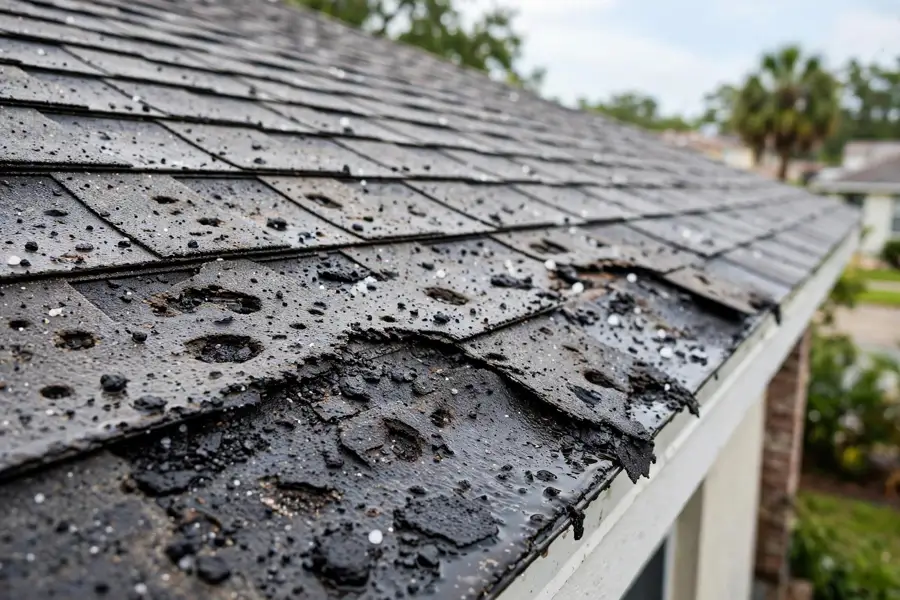
Hail damages a roof in ways a ground-level look cannot catch: granule loss that shortens shingle life, bruises and craters in the shingle mat, and dents in soft metal — gutters, vents, flashing and air-conditioning fins — that tell an inspector how big the hail was and which slopes it hit. Functional damage generally starts at about 1-inch hail, but the only way to know is to get on the roof and check the surface slope by slope.
Northwest Harris County, around Cypress, sits in the corridor locals call Hail Alley, and hail season in Houston runs through spring, peaking in May. Most very large hail in Texas falls between March and June. Hail and wind often arrive together — wind damage is covered on our storm damage page. Whether hail damage is a repair or a replacement depends on how much of the roof is functionally damaged, not on how it looks from the street.
Hail is assessed on the roof, slope by slope, and the repair follows what the roof actually shows.
Granule loss, bruises, craters and mat fracture — the damage that decides whether a roof is repaired or replaced. We mark and photograph test areas so the extent is on record.
Dented gutters, vents, flashing and AC fins. Soft metal shows hail size and direction, and it is often the clearest evidence of what the storm did.
Cosmetic dents do not always mean a failed roof. We separate functional damage — the kind that shortens roof life and lets water in — from cosmetic marks, because that distinction decides claims.
Spring is hail season, peaking in May. After a spring hailstorm, an inspection catches damage while it is fresh and the storm date is clear.
We photograph and measure the damage and provide a scope for your insurer. We are not a public adjuster, we do not negotiate claims, and we cannot guarantee approval. Texas law does not allow a contractor to waive your deductible.
Tell us when the hail fell and what you are seeing — granules in the gutters, dented vents, a leak. We will ask about the storm date, which matters for the claim.
Every slope is checked from the roof surface, with test areas marked and photographed. Hail damage is not assessed from the ground.
Gutters, vents, flashing and AC fins are checked for dents that show hail size and direction.
A scope that separates functional damage from cosmetic marks, and says plainly whether repair or replacement is the honest answer.
Damaged slopes are repaired to match or replaced, with new flashing and ridge ventilation, and the rest of the roof left alone where it is sound.
Hail is found by touch and by test areas, not by a glance from the street.
Test areas are marked on each slope so the extent of bruising and granule loss is measured, not guessed.
Checks whether hail damage has let water into the decking, and how far the wetting spread.
Every test area and every damaged slope photographed — the record your insurer needs.
Careful lifting of courses to check the mat beneath the shingle surface.
Clean cuts at valleys, hips and rakes so repaired slopes sit straight and shed water.
Fall protection for every crew member on every roof, tied off to a proper anchor.
Before: a spring hailstorm left granule loss across the south and west slopes, invisible from the ground.
After: the damage assessed from the roof surface, test areas photographed, and the scope — repair or replacement — put in writing.
Before: bruising and mat fracture across two slopes, with granules piling in the gutters.
After: the damaged slopes replaced to match, with new flashing and ridge ventilation, and the rest of the roof left alone.
Before: dented gutters and vents after a hailstorm, with the shingles looking fine from the street.
After: the soft-metal damage documented, the shingles checked slope by slope, and the real extent of the hail damage established.
Most Houston roof failures start small and hide. Hail is the quietest of them — it rarely leaks the same week.
Call (346) 654-5170Granules in the gutter are the first sign. We check the shingle surface, not the driveway.
A bruised shingle looks intact and fails early. We find bruising by touch and by test areas, not by eye from below.
Soft metal dents easily; shingles do not always follow. We read both before deciding what the storm actually did.
Functional damage decides claims, not dents. We separate the two in writing so the claim is honest.
“Used them for my bodyshop to do some Sheetrock work, ended up using them for my roof and remodel at my house. They gave me deadlines and knocked it out in time. They even helped with all my permits. Manny was here through every step even fought with my insurance company to make sure I get what I was supposed to. Went from business transaction to long time friendship”
Amer ZuriGoogle review · a month ago
✓ Google reviewEvery quote above is a verbatim Google review of Bridgegate Construction LLC. Our Google profile holds 31 reviews, all 5 stars; the ones we have not read are shown only as a total, never as quotes. Read all 31 reviews on our Google profile.
You usually cannot tell from the ground. Hail strips granules, bruises the shingle mat and dents soft metal — gutters, vents, flashing and AC fins. Granules piling in the gutters after a spring storm are the first sign. The damage is assessed from the roof surface, slope by slope, which is why a hail inspection means getting on the roof.
Functional shingle damage generally starts at about 1-inch hail — roughly quarter-size — combined with wind. Smaller hail can still dent soft metal and strip granules. Size alone does not decide it: the shingle’s age, the slope it hit and the wind behind the hail all matter, which is why the assessment is done on the roof, not from a weather report.
Spring, peaking in May — most very large hail in Texas falls between March and June. Northwest Harris County, around Cypress, sits in the corridor locals call Hail Alley. After a spring hailstorm, get the roof inspected while the damage is fresh and the storm date is clear.
Hail is usually covered under a standard Houston homeowners policy — most of Houston is outside the TWIA catastrophe area. Whether your claim is approved depends on your insurer and on whether the damage is functional, not just cosmetic. We document the damage and provide a scope; we cannot guarantee approval, and Texas law does not allow a contractor to waive your deductible.
 Storm Damage Roof RepairWind, hurricane and tree damage assessed, documented and repaired after the storm.Explore →Emergency Roof RepairStorm triage and tarping to dry in an open roof, with a prompt response during office hours.Explore →
 Roof InspectionEvery slope photographed, the attic checked where there is access, and a written assessment with photos and video.Explore →
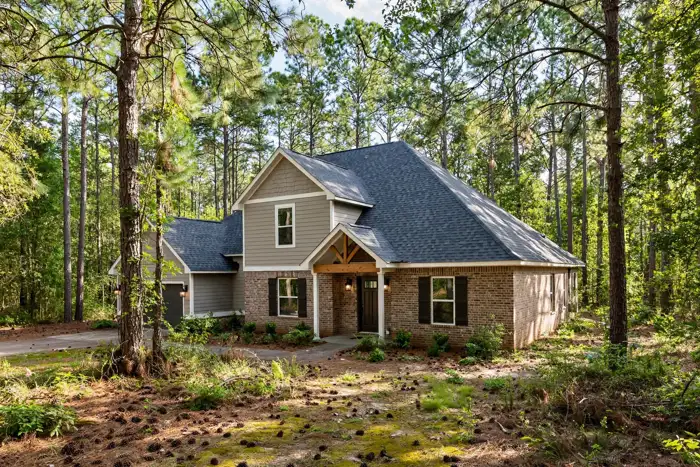 Roof ReplacementFull tear-off to the deck and a complete new system — shingle, metal, tile or flat — with the permit handled.Explore →
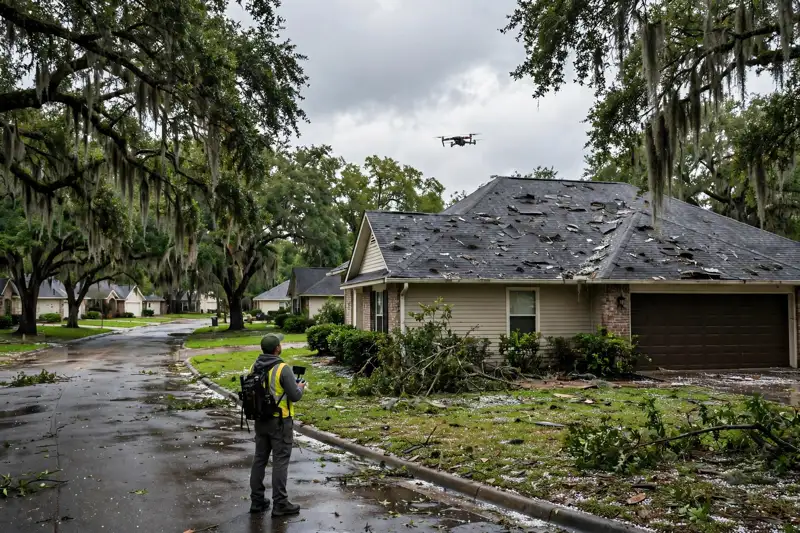 Roof RepairShingle, flashing, vent-boot, valley and ridge-cap repairs, plus fascia and soffit at the roof edge.Explore →
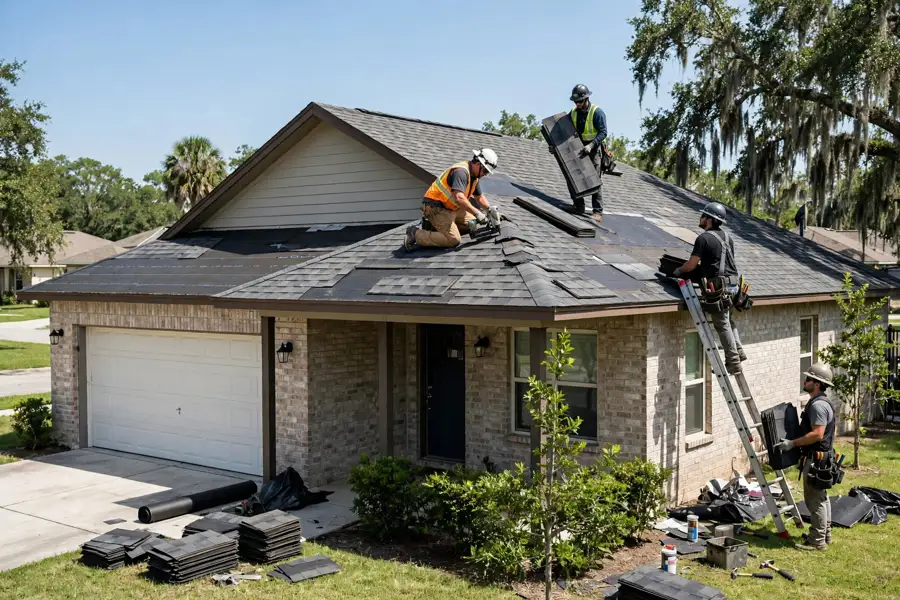 Roof Leak RepairLeaks traced to their source and fixed properly, with the interior damage taken care of too.Explore →Roof MaintenanceTune-ups, gutter cleaning and soft-wash roof cleaning that catch small problems early.Explore →
 Shingle RoofingArchitectural shingles — the standard Houston pitched roof — and impact-resistant options.Explore →
Call (346) 654-5170 during office hours. We will assess the hail damage from the roof surface, photograph it, and put the repair or replacement in writing.
Call (346) 654-5170Call (346) 654-5170 or send us a message and we will get back to you during office hours. Tell us when the hail fell and what you are seeing.