The stain is not where the leak is
Water travels. We trace the path from the stain back to the entry point instead of patching above the stain.
A ceiling stain is where water lands, not where it enters. We get on the roof, trace the leak to its source, and fix it — then take care of the interior damage it caused. If water is coming in right now, see emergency roof repair. For the full picture, start with a roof inspection.
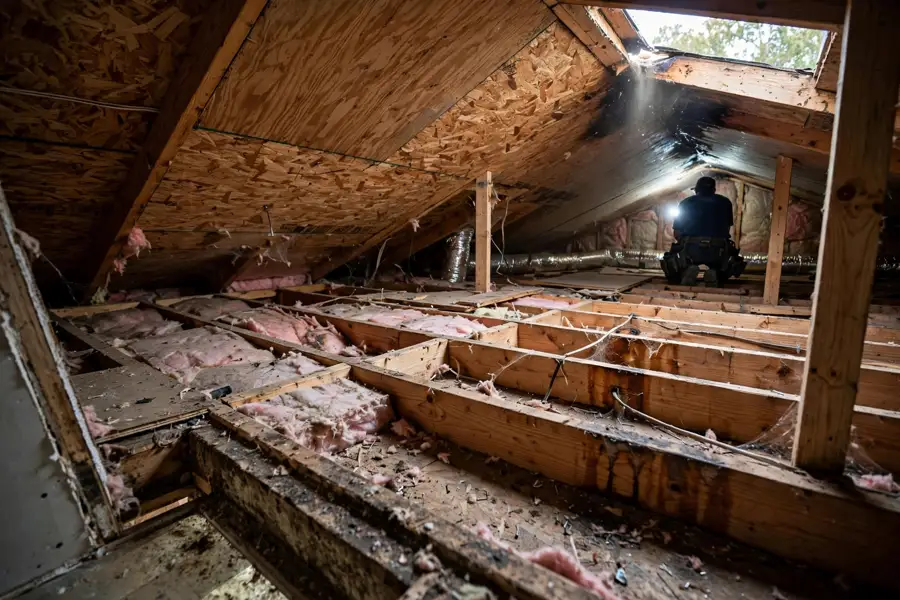
Leak repair starts with diagnosis, not patching. Water travels along decking, rafters and underlayment, so the stain on your ceiling can sit several feet from the hole in the roof. We inspect the roof surface, the attic where there is access, and the interior stain together, then repair the actual source — a cracked pipe boot, failed chimney flashing, a worn valley, a skylight curb, a nail pop, or wind-lifted shingles.
The most common Houston leak sources are pipe boots, flashing, valleys and skylights. Skylight leaks are usually flashing or curb failures, not the skylight unit itself — see our skylight page if the unit needs attention. A leak that has been patched before by another company gets extra attention: a bad earlier repair can hide the real source, as one of our Google reviewers found. If the deck is soft in several places or the roof is near end of life, we will say a replacement makes more sense than another repair.
Diagnosis first, then the repair — at the source, not above the stain.
Cracked rubber boots around vent pipes are the most common Houston leak. The boot is replaced and the pipe re-flashed, not sealed over.
Chimney, wall and skylight flashing is re-sealed or replaced. Failed flashing, not failed shingles, causes most Houston leaks.
Worn valleys are re-laid with new underlayment beneath, so heavy Gulf rain cannot work under the courses.
Skylight leaks are usually a flashing or curb problem. We re-flash the curb and check the unit; if the skylight itself has failed, we say so before quoting.
A leak does not end at the roof. We take care of the interior damage the leak caused — stained drywall and trim — so the job is finished, not half done.
We inspect the roof surface, the attic where there is access, and the interior stain together, tracing the water path back to its entry point.
You get a written scope: the source, the repair, and whether the interior needs work — before anything is fixed.
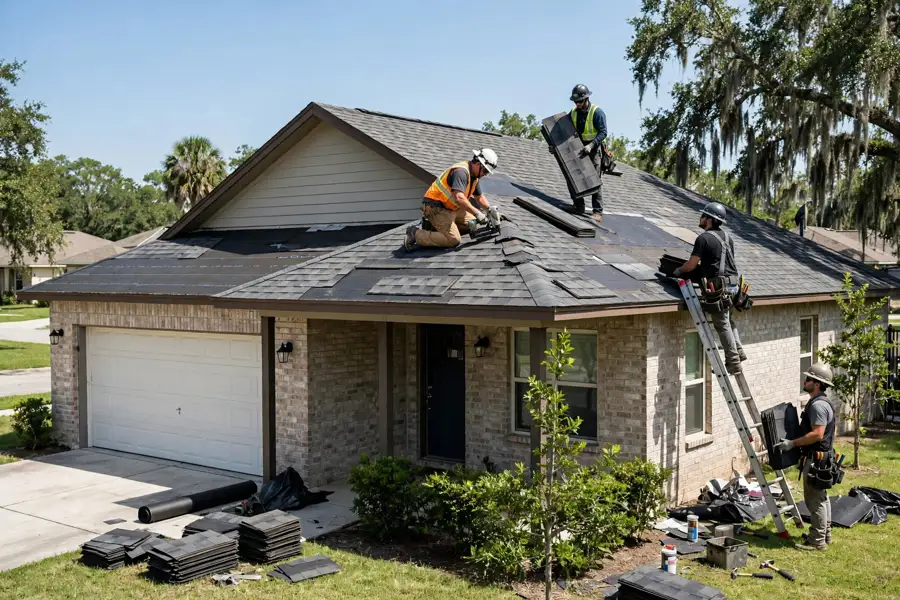
The failed boot, flashing, valley or curb is replaced, with new underlayment beneath and the surrounding courses re-sealed.
Stained drywall and trim damaged by the leak are repaired, so the job ends with the house whole again.
We photograph the source and the repair and walk you through both, so you can see what was wrong and what was done.
Finding the leak is the hard part. The tools are for confirming what the roof and the attic are telling us.
Confirms whether decking and insulation are wet, and how far the wetting spread from the entry point.
Careful lifting of surrounding courses to check underlayment and decking without disturbing good shingles.
Sealant applied where it belongs — at flashing and joints — never as a substitute for replacing a failed part.
Clean cuts at valleys, hips and rakes so the repaired courses sit straight and shed water.
Straight course lines and a stable ladder footing on Houston’s varied roof pitches.
Fall protection for every crew member on every roof, tied off to a proper anchor.
Before: a leak over the kitchen every time it rained hard, patched from inside more than once.
After: the source traced to chimney flashing, not the shingles — flashing replaced, deck checked, stain gone.
Before: a stain that grew with every storm, with the roof above it looking fine from the ground.
After: a cracked vent boot found on the roof, replaced and re-flashed, and the interior dried and repaired.
Before: a previous repair by another company that never held, with water still finding its way in.
After: the failed repair removed, the real source found and fixed, and the interior taken care of.
Most Houston roof failures start small and hide. These are the ones we see most, and what happens if they are left alone.
Call (346) 654-5170Water travels. We trace the path from the stain back to the entry point instead of patching above the stain.
Sealant on the ceiling hides the problem while the deck rots. We fix the roof, then the interior.
Usually flashing or the curb, not the skylight. We re-flash the curb and check the unit before quoting anything.
A repair that does not hold usually means the source was missed — or a bad earlier repair is hiding it. We find both.
“Absolutely wonderful service. Had an issue with my roof leaking and they were attentive and listened my concerns. They get on the roof and found and fix the leak then took care of the interior too. They even fixed a poorly done previous repair done by another company. I Would recommend”
Nate DorrGoogle review · 3 months ago
✓ Google reviewThe reviews quoted on this page are word-for-word Google reviews of Bridgegate Construction LLC, shown with each reviewer's name as it appears on Google. We have read five of our 31 Google reviews — all 5 stars — and the rest appear only in that total. Read all 31 reviews on our Google profile.
We inspect the roof surface, the attic where there is access, and the interior stain together. Water travels along decking and rafters, so the stain is rarely below the entry point — the most common Houston sources are pipe boots, flashing, valleys, skylights, nail pops and wind-lifted shingles. We photograph what we find and show you the source before quoting.
As market context only — not a quote — Angi’s Houston figures put leak repair at $360–$1,550, and flashing repair at $200–$500. What you pay depends on the source, how much roof must be opened, and whether decking or interior work is involved. We give you a written scope before work starts.
Yes. A leak does not end at the roof, and we take care of the interior damage it caused — stained drywall and trim — so the job is finished. One of our Google reviewers notes we fixed the leak and took care of the interior too, including a poorly done previous repair by another company.
Yes — get it looked at. A leak that shows only in Gulf downpours is still water reaching your decking and insulation, and Houston’s 51.8 inches of annual rain gives it plenty of chances. If water is coming in right now, see our emergency roof repair page; if it is an old or intermittent stain, book an inspection.
 Emergency Roof RepairStorm triage and tarping to dry in an open roof, with a prompt response during office hours.Explore →Roof InspectionEvery slope photographed, the attic checked where there is access, and a written assessment with photos and video.Explore →
 Roof RepairShingle, flashing, vent-boot, valley and ridge-cap repairs, plus fascia and soffit at the roof edge.Explore →
 Roof ReplacementFull tear-off to the deck and a complete new system — shingle, metal, tile or flat — with the permit handled.Explore →
 Storm Damage Roof RepairWind, hurricane and tree damage assessed, documented and repaired after the storm.Explore →
 Skylight InstallationSkylight flashing and curb work — the usual source of skylight leaks — and new skylights with a re-roof.Explore →Roof MaintenanceTune-ups, gutter cleaning and soft-wash roof cleaning that catch small problems early.Explore →
 Attic VentilationBalanced ridge and soffit ventilation, vent installation and attic fans for Houston heat and humidity.Explore →
Call (346) 654-5170. We will get on the roof, find where the water is getting in, and put the fix — and the interior repair — in writing.
Call (346) 654-5170Call (346) 654-5170 or send us a message and we will get back to you during office hours. Tell us where the stain is and when it shows up, and we will trace it to the source.