Ponding water that never drains
Ponding is a design problem. We fix the drainage and the slope, not just the membrane over it.
Commercial roofs are flat or low-slope systems — TPO, EPDM, modified bitumen — with drains, parapets and rooftop equipment that residential roofs do not have. Every commercial roof is scoped per building: system, size, drainage and access decide the approach. Call (346) 654-5170 to confirm scope for your building, or start with a roof inspection.
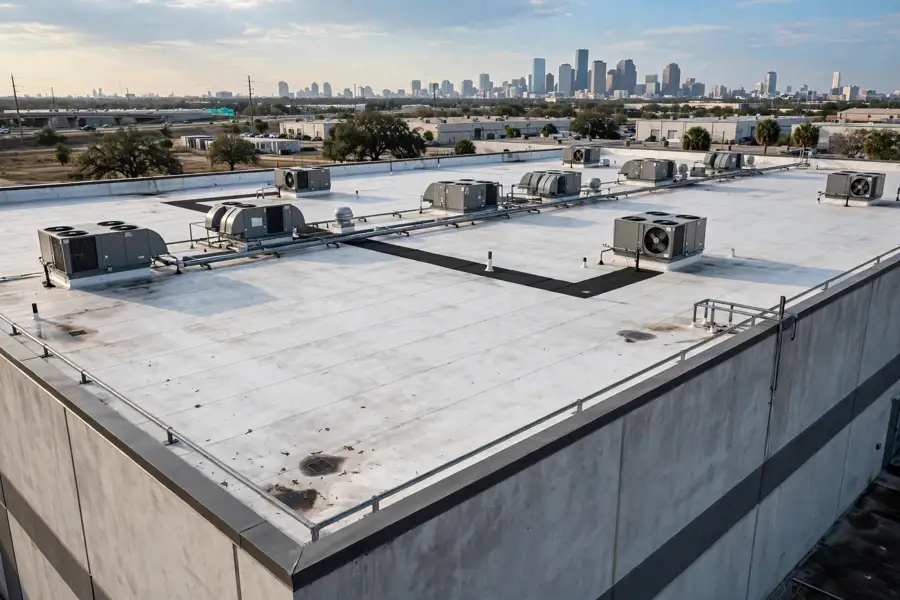
Commercial roofing means flat and low-slope membrane systems on buildings where the roof is a working surface: drains and scuppers, parapets, rooftop equipment, and foot traffic for maintenance. The failure modes are different from a pitched home roof — ponding water, seams that open under thermal shock, drains undersized for Gulf downpours, and parapet flashing that lets water into the top floor. A commercial job is scoped per building, because no two buildings share the same system, size or access.
The systems are TPO, EPDM, PVC and modified bitumen, plus coatings and metal on some buildings — see our flat roofing and TPO roofing pages for the systems themselves. Energy Corridor, Westchase and Galleria buildings bring their own patterns: large flat areas, heavy rooftop equipment, and property-manager approval chains instead of a single homeowner’s decision. Call to confirm scope for your building — system, size and access decide the approach, and we will say plainly if a job is outside what we do.
Systems first, then the building: the membrane is chosen for the roof it has to cover, not for habit.
Single-ply TPO in 45-, 60- and 80-mil thicknesses, heat-welded at the seams, with white membrane reflecting Houston heat. See our TPO roofing page.
Rubber membrane and two-ply modified bitumen for flat roofs where they fit the building and the budget — each system chosen per building, not per habit.
Standing water is a design and drainage problem, not a maintenance one. Drains and scuppers are sized for Gulf downpours, and tapered insulation removes true zero-slope areas.
Parapets, curbs, vents and rooftop equipment are the leak points on a flat roof. Flashing is detailed for each one, not left to sealant.
A sound membrane with a failing surface can sometimes be restored; a failed membrane cannot. We say which one yours is, with the evidence, before quoting.
We walk the roof and the top floor, checking the membrane, seams, drains and scuppers, parapets and penetrations — and how the building is used below.
A written scope that says which system fits, whether restoration or replacement is the honest answer, and what it will take to keep the building open during the work.
Noisy or disruptive stages are sequenced to suit the tenant. Access, staging and safety are agreed in writing before work starts.
Membrane, tapered insulation, drains and flashing are installed in the right order, with each penetration and parapet detailed rather than sealed over.
Photos of the finished roof, the scope as built, and a record of what was done — for the building’s file and the next inspection.
Flat-roof tools for flat-roof work — seams are welded, not nailed, and drainage is measured, not guessed.
Heat-welds TPO and PVC seams so the membrane is one continuous surface, not a set of glued joints.
Rolls each welded seam flat while it cools, so the weld holds for the life of the membrane.
Checks whether ponding or a failed seam has already let water into the insulation and deck.
Every seam, drain and parapet photographed — the record the building manager needs.
A stable ladder footing on Houston’s varied roof pitches, so the crew can work safely.
Fall protection for every crew member on every roof, tied off to a proper anchor.
Before: standing water on a flat roof after every storm, with seams opening under thermal shock.
After: drains resized, tapered insulation installed to remove zero-slope areas, and the membrane replaced.
Before: a flat membrane past its useful life, with blistering and open seams across the field.
After: a full tear-off and a new TPO system, with parapet flashing detailed and the work documented.
Before: water entering around rooftop curbs and penetrations, with sealant re-applied year after year.
After: each penetration re-flashed properly, and the membrane checked across the whole field.
Flat roofs fail differently from pitched roofs. These are the failures we see most on Houston buildings.
Call (346) 654-5170Ponding is a design problem. We fix the drainage and the slope, not just the membrane over it.
Flat membranes blister under Houston thermal shock. We check seams across the whole field, not just where it leaks.
The top floor leaks first when parapet flashing fails. We detail each parapet and penetration instead of sealing over it.
A commercial roof is not a big residential roof. We scope per building — system, size, drainage and access — and say plainly if a job is outside what we do.
“Used them for my bodyshop to do some Sheetrock work, ended up using them for my roof and remodel at my house. They gave me deadlines and knocked it out in time. They even helped with all my permits. Manny was here through every step even fought with my insurance company to make sure I get what I was supposed to. Went from business transaction to long time friendship”
Amer ZuriGoogle review · a month ago
✓ Google reviewThe reviews quoted on this page are word-for-word Google reviews of Bridgegate Construction LLC, shown with each reviewer's name as it appears on Google. We have read five of our 31 Google reviews — all 5 stars — and the rest appear only in that total. Read all 31 reviews on our Google profile.
TPO, EPDM, PVC and modified bitumen flat and low-slope systems, plus coatings and metal on some buildings. Which system fits depends on the building — its size, drainage, rooftop equipment and budget — so every commercial roof is scoped per building. See our flat roofing and TPO roofing pages for the systems themselves.
Per building, after an inspection — there is no single per-square-foot number that means anything without scope. Published Texas figures for a full commercial tear-off and new system range widely depending on whether tear-off, insulation, flashing and disposal are included. Call (346) 654-5170 and we will inspect the building and put a written scope together.
That is the plan on most commercial jobs: work is sequenced around the building’s operations, with noisy or disruptive stages scheduled to suit the tenant. Access, staging and safety are agreed in writing before work starts.
Yes — a commercial inspection covers the membrane, seams, drains and scuppers, parapets and penetrations, with photos and a written assessment. It is the basis for deciding between restoration and replacement, and for planning work around the building’s budget cycle.
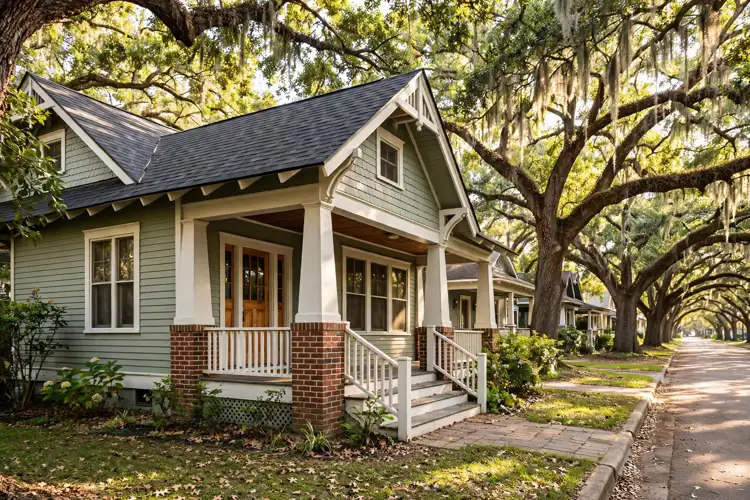 Flat RoofingLow-slope TPO, PVC and modified bitumen systems for additions, townhomes and commercial roofs.Explore →TPO RoofingTPO membrane systems for flat and low-slope roofs, in 45-, 60- and 80-mil thicknesses.Explore →
 Roof InspectionEvery slope photographed, the attic checked where there is access, and a written assessment with photos and video.Explore →
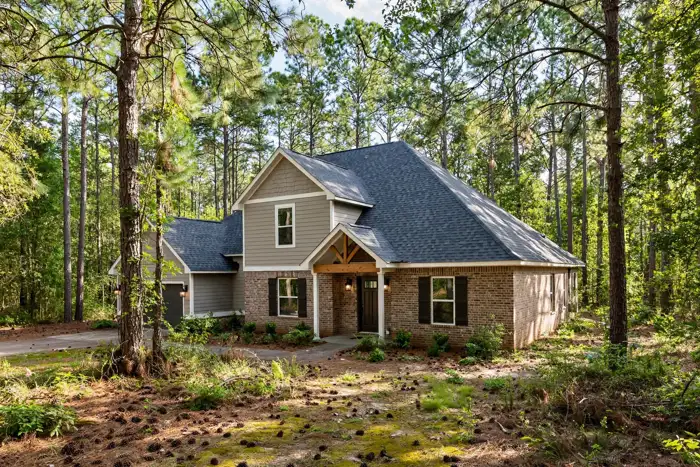 Roof MaintenanceTune-ups, gutter cleaning and soft-wash roof cleaning that catch small problems early.Explore →
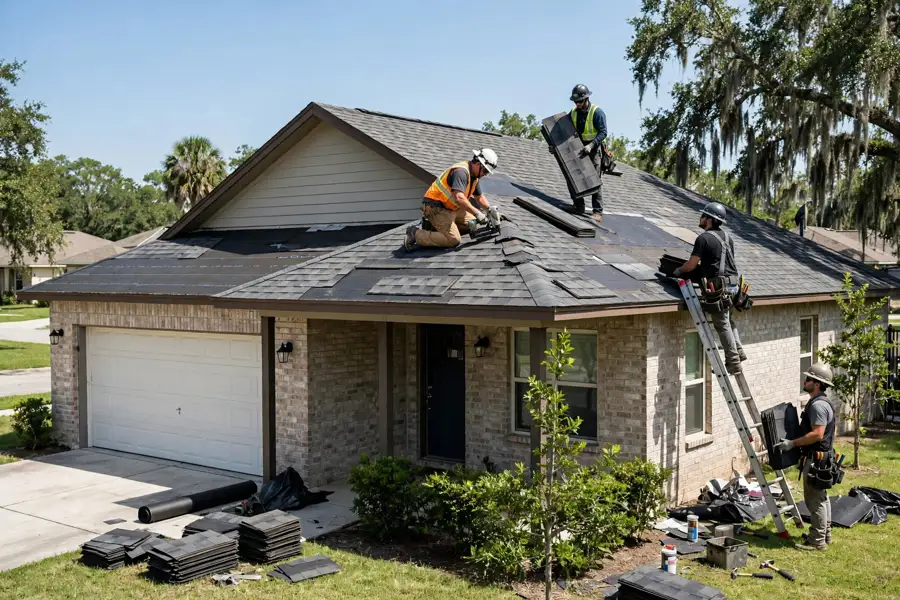 Roof RepairShingle, flashing, vent-boot, valley and ridge-cap repairs, plus fascia and soffit at the roof edge.Explore →Roof Leak RepairLeaks traced to their source and fixed properly, with the interior damage taken care of too.Explore →
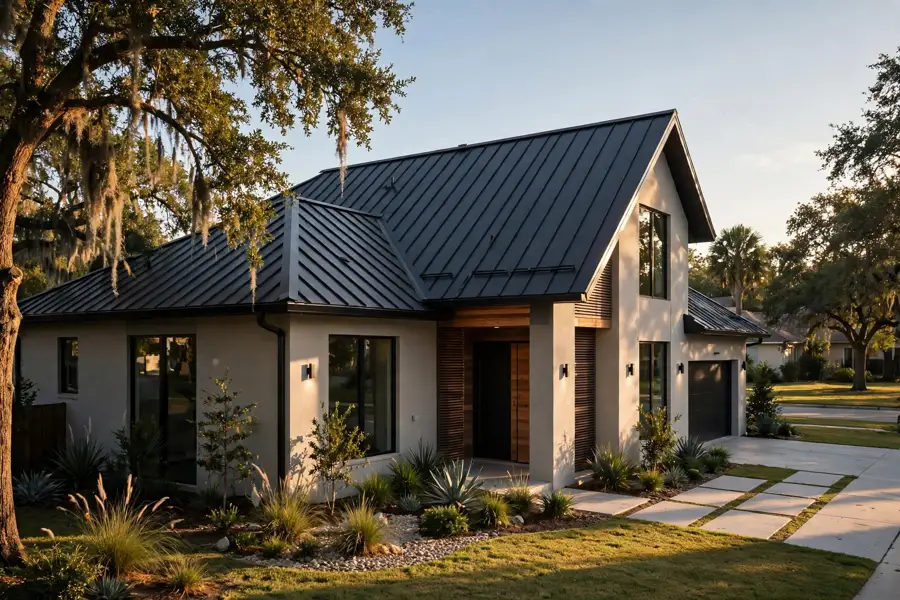 Residential RoofingEverything we do on Houston homes, from inspection to final walk.Explore →
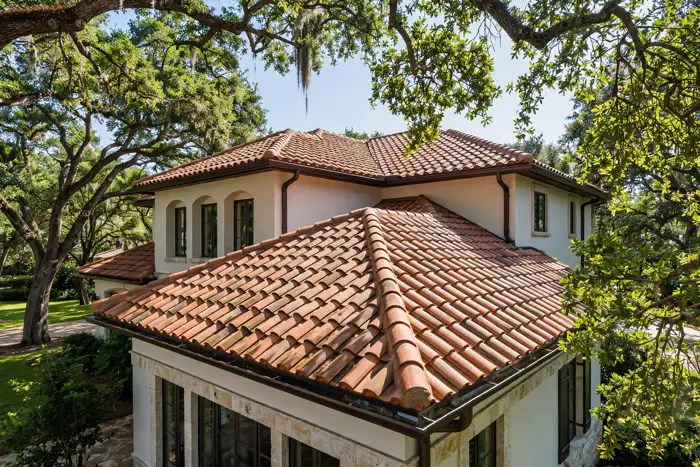 Storm Damage Roof RepairWind, hurricane and tree damage assessed, documented and repaired after the storm.Explore →
Call (346) 654-5170 during office hours. We will inspect your building’s roof, put the scope in writing, and tell you honestly whether it needs restoration, replacement, or nothing yet.
Call (346) 654-5170Call (346) 654-5170 or send us a message and we will get back to you during office hours. Tell us about the building — system, size, and what is happening on the roof.