Why is water dripping from my ceiling after a Houston storm
A ceiling drip after a Houston storm usually means roof damage let water in — but the roof can survive structurally and still admit weeks of rain. Here is what to do now.
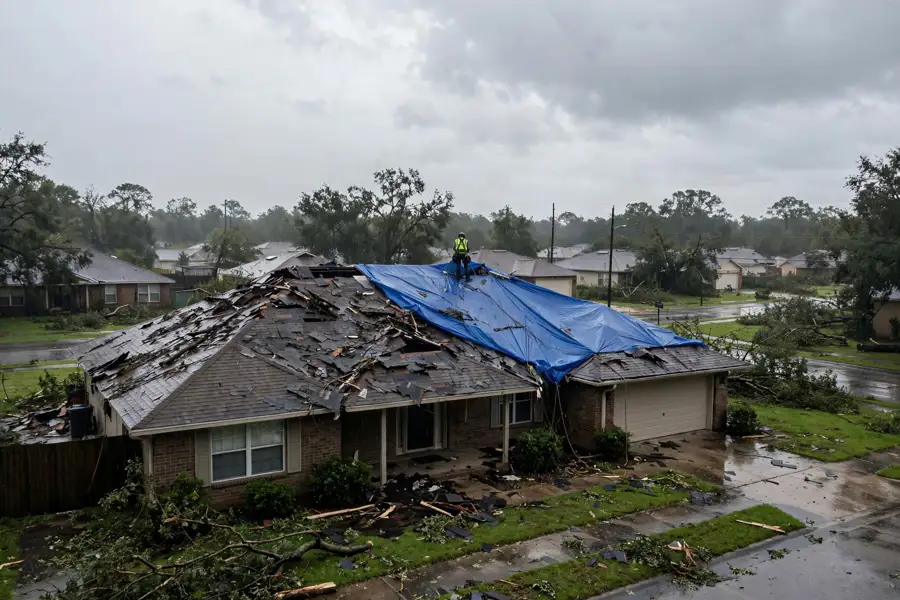
Water dripping from a ceiling after a Houston storm usually means roof damage let water in. The part people miss is the second half of that sentence: a roof can survive a storm structurally and still admit weeks of rain, if shingles or flashing were compromised. Harvey’s pattern was exactly that — roofs that held their shape but let water in for days, softening underlayment and decking that did not show damage until months later. This post is first-hours triage: safety, documentation, and the decision between emergency, leak and inspection.
The first hours: safety, buckets, photos
Stay out of rooms with sagging ceilings or sparking fixtures. Put buckets under the drip, move valuables, and photograph the drip, the stain and the room before anything is moved or covered — from the ground and from inside. Note the storm date and time. If water is near light fixtures or an electrical panel, turn off power to that area and call an electrician. Do not climb onto the roof in the rain, and do not poke a hole in a sagging ceiling without a bucket underneath it and a plan for the water that comes out.
The stain is not the leak
Water enters at the roof deck and travels along rafters or sheathing before it drips, so the stain marks where water exits — often several feet from where it entered. The common Houston sources are pipe boots, flashing, valleys, skylights, nail pops and wind-lifted shingles. A roof inspection finds the source; a glance at the ceiling does not. If the drip is active water coming in now, that is an emergency roof repair: dry-in first, to stop more water getting in. If it is an old or intermittent stain that appeared after the storm, that is a roof leak repair inspection.
Document for the claim before anything is repaired
Photograph and video the damage, keep the storm date written down, and get an independent inspection before filing. The adjuster inspects after you file, and a roofer may be present at your request to document — not to negotiate. The scope of loss is usually written in Xactimate, and a supplement can be filed if items are missing. On an RCV policy the first payment is actual cash value, and recoverable depreciation is released after the work is completed and documented. We are not a public adjuster, we do not negotiate claims, and we cannot guarantee approval. Our roof insurance claims hub covers the process, ACV versus RCV, and the deductible law — including that waiving a deductible is illegal in Texas.
What happens next
After dry-in, the inspection decides whether the fix is a repair or a replacement, and whether the damage is storm-caused or age. Architectural shingles last roughly 18–25 years in Houston heat and humidity, and a leak on a roof that age is often the first sign the system is done. Do not promise yourself the leak is fixed because the drip stopped: a compromised roof can admit water in the next storm even when it looks dry now. See our storm damage page for the storm version, and our roof repair page for the fix itself.
Get help with water dripping from the ceiling
Water dripping from the ceiling? Water dripping after a Houston storm? Call (346) 654-5170 — first-hours triage starts with stopping the water, then documenting for your claim. Tell us where the water is and when it started.