Storm damage on a shingle roof: when to call a pro
After a Houston storm, the damage that matters is often invisible from the ground. Here is what to look for safely, how to document it, and when to call a professional.
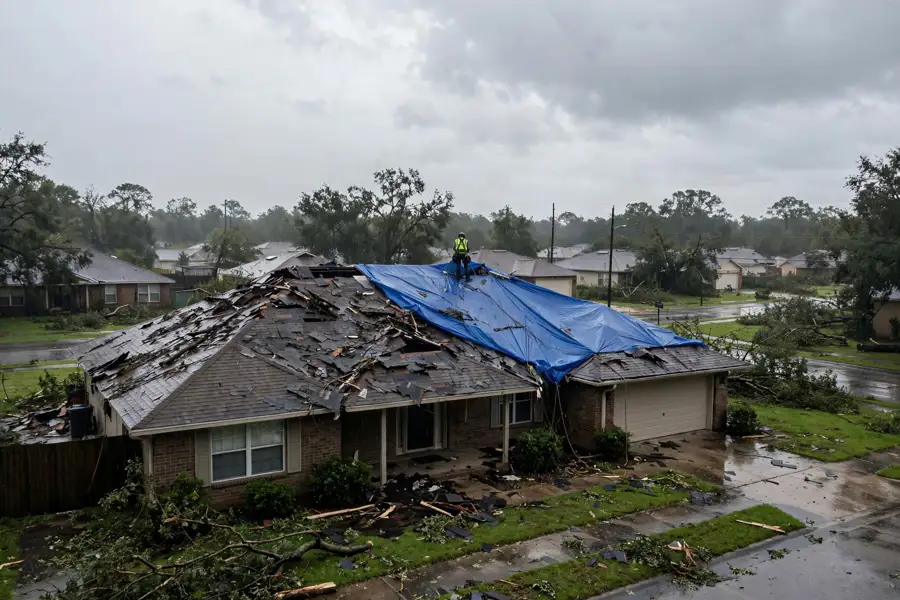
After a Houston storm, the first instinct is to climb up and look. Do not. A storm-damaged shingle roof is a wet, soft, sometimes structurally uncertain surface, and the damage that decides your claim is often invisible from the ground anyway. This post is not a repair guide — there are no repair steps here, because shingle repair on a storm-damaged roof is a professional job, done from the roof surface with the right fall protection and the right knowledge of what the insurer needs to see. It is a guide to what to look for from the ground, how to document it, and when to call.
What to look for from the ground
Walk the property, not the roof. Look for shingles or shingle pieces on the ground, lifted or creased shingles visible from the street, granules piled in gutters and at downspout outlets, dented gutters, vents and air-conditioning fins — the soft-metal tells that prove hail — and water stains inside that were not there before the storm. Note the storm date and time, and photograph everything before anything is moved. Granule loss is the quiet one: functional shingle damage generally starts at about 1-inch hail or a 58 mph gust, and a bruised shingle can look intact from the ground while its mat is fractured underneath.
What a professional inspection finds that you cannot
Hail and wind damage are assessed from the roof surface, slope by slope. An inspector looks for granule loss, bruises and craters, mat fracture, lifted and creased shingles, and flashing damage — and, just as importantly, for the difference between functional damage and cosmetic damage, which is what decides a claim. Houston shingles last roughly 18–25 years in heat, UV and humidity, so the inspector also has to separate storm damage from age: a 22-year-old roof with granule loss is not automatically a storm claim. Our storm damage roof repair and hail damage roof repair pages explain what that inspection covers, and a roof inspection is the step before any filing.
Repair or replacement — and the permit line
Whether storm damage is a repair or a replacement is a scope decision, not a preference. Small, localised damage on a young roof can be a repair; widespread functional damage, or damage on a roof already near the end of its life, is usually a replacement. The permit line matters: for a re-roof or overlay, roof covering of 100 square feet or less in aggregate is exempt from the permit; a repair above that size is not automatically permit work — the permit line follows the scope, and a full replacement is always permit work. A contractor who calls a full replacement a “repair” to skip the permit and inspection is one to avoid. Sourced market context: hail and wind repair typically runs $800–$4,500 out of pocket, according to a Houston guide — a market range, not a quote for your roof.
Document, then call — in that order
Photograph from the ground, note the storm date, and call for an inspection before you file a claim. Do not sign anything at the door from a storm-chasing crew, and do not let anyone start work before the adjuster has seen the roof, unless emergency dry-in is needed to stop more water getting in. If water is actively coming in, that is an emergency roof repair. For the claim itself — ACV versus RCV, the deductible law, and what a roofer can and cannot do — see our roof insurance claims hub and our shingle roofing page.
Get help with storm damage
Storm damage to check? After a Houston storm, the bruising hides from the ground. Call (346) 654-5170 for an on-roof look before the next rain. We will inspect, photograph what we find, and give you a written scope.