How to prepare your roof for hurricane season in Houston
Your roof is what hurricane season tests first. Hurricane season runs 1 June to 30 November, peaking in the second week of September. The work that matters happens in May — here is the checklist.
Hurricane season runs from 1 June to 30 November, peaking in the second week of September. The honest inspection window is the off-season, December to April — and the checklist that matters is done in May, before the season opens. No competitor owns a proper pre-season guide, and this is it: fastening and flashing, drainage, trees, documentation, and insurance, in that order. No roof is proof against a hurricane — wind-resistant and wind-rated are the only honest words, and no forecast belongs in a roofing post.
The May checklist
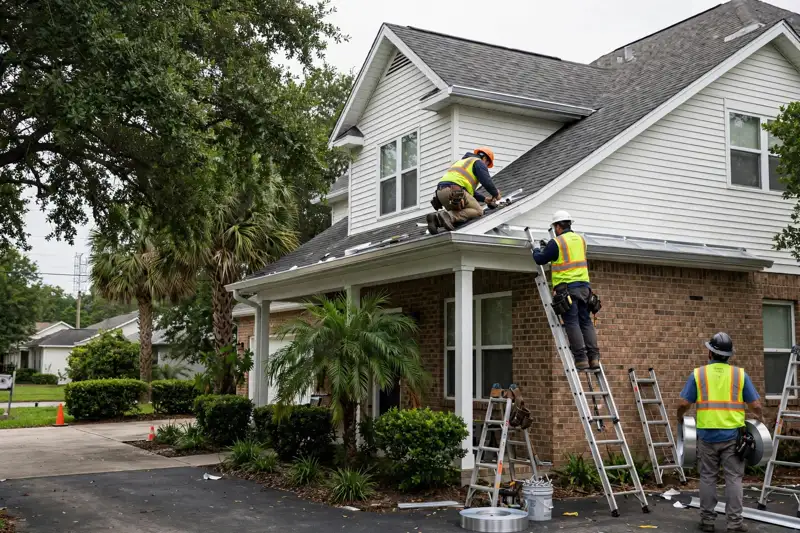
Book a roof inspection in May. The inspector should check fastening and flashing at ridges, hips and edges, pipe boots and skylight curbs, valleys, and the edge details where wind gets under a roof first. Gutters, drains and scuppers should be clear — on a flat roof, a blocked drain is a pond, and a pond is a leak. Tree limbs over the roof should be cut back: Beryl’s worst damage in many neighbourhoods was limbs through roofs, not wind on shingles. Loose items in the yard become debris in a storm. And photograph the roof now, before the season: dated photos are the documentation your insurer will want if you file.
Wind ratings, clips and secondary water barriers
Ask what your roof is rated for, not what it is called. Shingle wind ratings run to ASTM D3161 110 mph and above; Class 4 under UL 2218 is hail-resistant, not proof against hail. Hurricane clips and roof-to-wall ties, a secondary water barrier or self-adhering deck-seam tape, and a FORTIFIED roof are the upgrades worth asking about at replacement time — not as a retrofit the week a storm is named. There is no Houston hail or Class 4 mandate, and no cool-roof mandate for a residential re-roof, so any contractor who tells you the code requires them is selling, not informing.
Insurance before the storm
Read your policy in May, not in September. Know whether you have a wind or hail deductible — often 1–2% of the dwelling value, $4,000–$8,000 on a $400,000 home — and whether your policy is RCV or ACV-only. Check the TWIA position for your address: most of Houston is outside the designated catastrophe area, and only the parts of Harris County east of SH 146 inside La Porte, Morgan’s Point, Pasadena, Seabrook and Shoreacres are in. Our roof insurance claims hub covers ACV versus RCV and the deductible law in full.
After the storm: what to check
After a named storm, photograph from the ground first, then book a storm damage inspection before filing a claim. Beryl was a Category 1 and still stripped at least three NRG Stadium roof panels — a Category 1 is not a minor storm, and damage is not always visible from the ground. For the coastal-wind version of this checklist, see our Clear Lake and Kingwood pages; for what to do after a storm, see storm damage roof repair.
Get help before hurricane season
Want a pre-season inspection before 1 June? Call Bridgegate Construction LLC at (346) 654-5170 and we will arrange it.